
Cooling System
Coolant Color vs Coolant Specification: What Matters?
Quick Answer
Coolant color is a dye chosen by the manufacturer, not a standard for chemistry. Two coolants of the same color can use different corrosion inhibitor technologies, and two of different colors can be compatible. Buy by the specification in your owner's manual, not by color.
By Everyday Solutions Exchange Editorial · Published Oct 2026
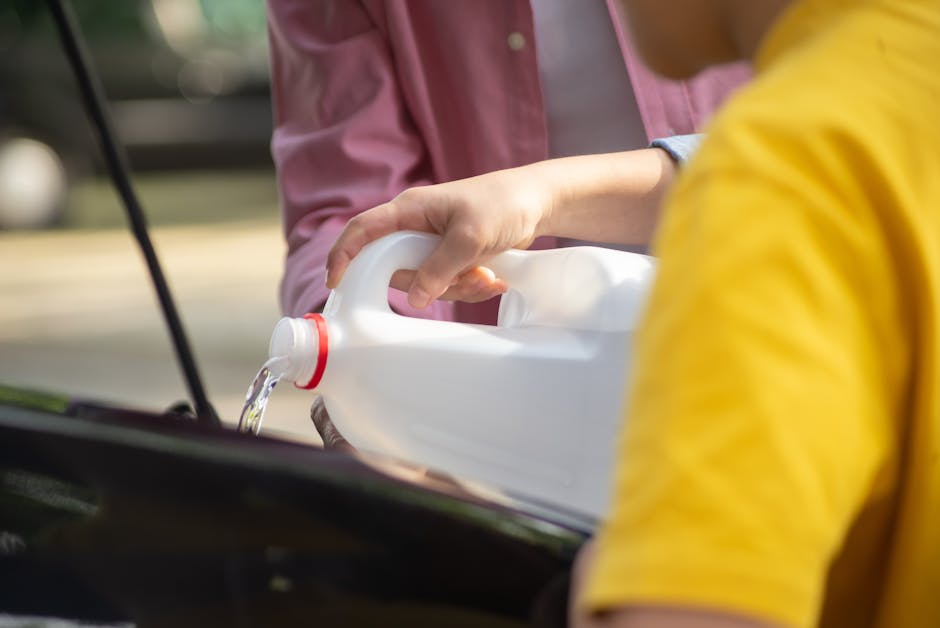
Coolant color is the most misleading thing on the jug. It looks like a category system, and it is not one.
Why Colors Exist
Dye is added so you can see the coolant level in a translucent reservoir and spot leaks. Each manufacturer picks its own dye, and there is no industry rule tying a color to a chemistry.
Historically, some patterns emerged: green for conventional silicate-based coolant, orange for certain extended-life organic acid formulations, pink and blue for specific manufacturer standards. Those associations broke down as formulations diversified and as manufacturers adopted similar chemistry under different dyes.
The Two Main Chemistry Families
Most modern coolants fall into two broad groups:
- Conventional or hybrid technologies, which use silicates and other inorganic inhibitors that protect quickly but deplete over time.
- Organic acid technology (OAT), which uses carboxylate inhibitors that deplete slowly and support long service intervals.
Some formulas combine both, which is why a "hybrid" label appears. Mixing families can reduce protection, particularly if the inhibitors react and drop out of suspension.
Why the Specification Wins
The owner's manual and the coolant jug list a specification, not a color. Typical examples include manufacturer standards or industry specifications that define the required chemistry, the dilution ratio and the service life.
If your manual says the cooling system requires a particular specification, the only safe purchase is a coolant that lists that specification on the label. A color match is not evidence.
Mixing and Topping Off
- Top off with the correct pre-mixed coolant where possible, so you do not change the concentration.
- Do not mix different chemistries unless the label explicitly says the product is compatible with the system's specification.
Concentration and Climate
Coolant is usually sold as a 50/50 pre-mix or as concentrate. A 50/50 mix covers most climates. In extreme cold, the label's table shows the ratio for the protection you need. Going beyond roughly 70 percent coolant reduces heat transfer and freeze protection, so more is not better.
When to Change It
Follow the manual's interval, which for many modern vehicles is several years or a specific mileage. A coolant that looks clean can still have depleted inhibitors, and a coolant that looks dirty may simply be picking up debris.
Warning signs that call for inspection rather than a top-off: sweet smell with no visible leak, a low reservoir that keeps dropping, oil film in the coolant, or a temperature gauge that climbs.
For related reading, see what do motor oil numbers mean.
Related Questions
- Can I mix green and orange coolant?
- What happens if I use the wrong coolant?
- Is 50/50 coolant better than concentrate?
- How often should coolant be changed?
Sources & References
Related Guides
Supplement Lot Numbers: How to Check a Recall
A lot number is a manufacturer code printed on the bottle or its label, often near the expiration date, that identifies the production batch. Recall notices lis
What Is Resistant Starch? Foods, Labels and Digestion
Resistant starch is starch that escapes digestion in the small intestine and reaches the colon, where gut microorganisms ferment it. It occurs naturally in food
What Does CFU Mean on a Probiotic Label?
CFU stands for colony-forming units, a count of live microorganisms able to multiply under test conditions. A label such as 10 billion CFU describes the amount
Keep Exploring
Explore more in Automotive
Where to Look Next
If this guide helped you compare options, the official MarketPlace Global Momentum store lists the current categories, labels and ingredient details: Automotive on MarketPlace Global. Always review the current product label before purchasing.